

For years, publishers have hitched their good name (and domain authority) to poor quality content in a bid to make more money. From CNN’s attachment of sponsored posts and Outbrain ads to hard news articles, 2U’s dependence on affiliate marketing in higher education, to CNET’s AI-generated content scandal, we have truly entered a new age. Of garbage.

To be fair, all of the above are businesses that are trying to make a profit however they can. And full disclosure: I have run Taboola ads for clients a handful of times – the results were crap.
But Google, has rewarded affiliate marketing networks, low-quality content, and now AI-generated articles, with high SERP rankings, and developed many of the tools that power it. So it’s only fair they should finally try to combat this scourge.
Proof That Google Cares About Search Quality After All
It has been an open question among SEOs whether Google cared enough about the decline in search engine results quality over the past 2-3 years. Some of us (myself included) were skeptical and figured it was a bid to maximize Google Ads spend, damn the consequences.
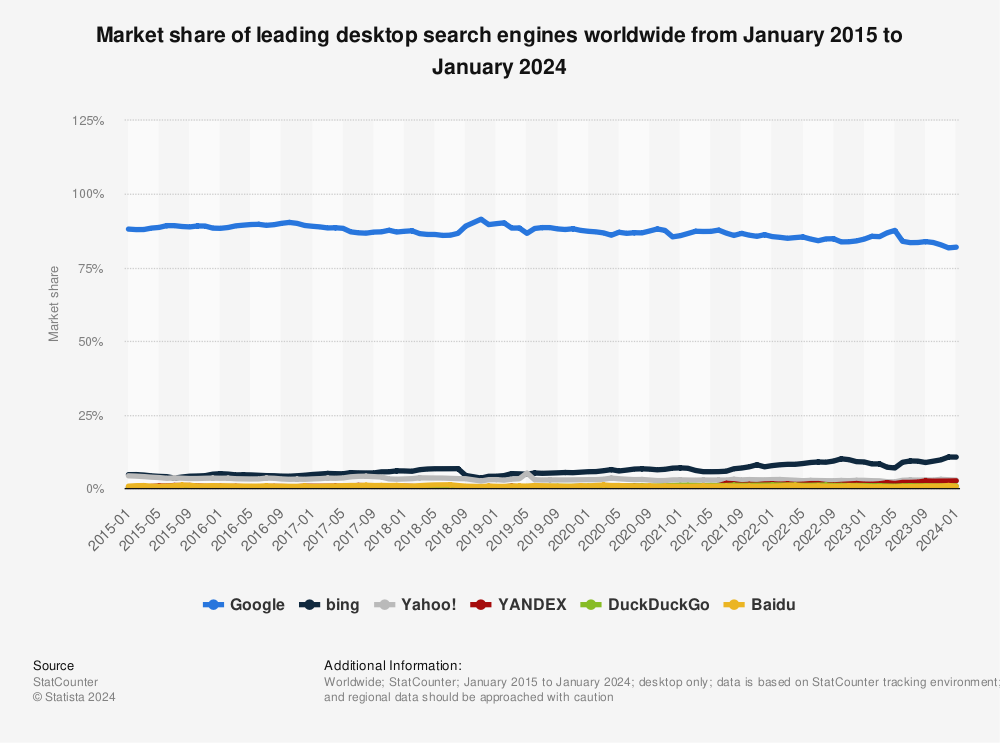
There’s so much inertia reinforcing Google’s search hegemony that only a huge shift can dethrone them as the number one search engine.
Find more statistics at Statista
Given trends in search engine market share, it would take another 30 years for Google to be seriously threatened. Organizing the world’s knowledge, indeed.
What Is The Site Reputation Abuse Update?
This is a recent update to Google’s search engine rankings algorithm that rolled out starting on May 5. Google discussed some of the intended effects of the update in a Search Central blog article back in March.
In a nutshell, Google is cracking down on websites that host low-quality content from third-party networks to manipulate search rankings. You know, the kind of content that makes you wonder how it ever got published in the first place.
Google has clarified that not all third-party content is considered spam. If it’s relevant and valuable to the regular readers of a publication, you’re probably in the clear. However, the update has particularly impacted websites that heavily rely on affiliate marketing and sponsored content. I guess those networks are a bit too good at spreading the love (or the spam, depending on how you look at it).
How Will This Google Update Affect Higher Education?

Higher education institutions face a predicament. Many universities and EdTech firms utilize sponsored content or affiliate marketing to generate revenue or reach wider audiences. However, this update forces a reevaluation of these strategies. Striking the right balance between informative, student-centric content and revenue-generating partnerships will be crucial for maintaining strong organic search performance.
Will There Be Any Effect On Government Websites?

For government agencies, this update presents a unique challenge. While the focus on quality content is admirable, many government websites rely on third-party platforms to host and disseminate information. This can inadvertently lead to the kind of “site reputation abuse” Google is now targeting. Agencies will need to carefully review any external content partnerships and ensure that hosted content is not only relevant but also meets Google’s stringent quality standards. Failing to do so could lead to a drop in visibility for critical government resources and information.
The AI-Powered Content Future
Proliferation of artificial intelligence tools for long-form content creation like ChatGPT and Bard, plus more specialized tools such as Content at Scale or Peppertype (no, I’m not giving these a link) make me wonder whether humans will have a place in writing at all.
Should we subscribe to AI services that write our content pay and another AI service to read them for us? Is this how we finally reach Idiocracy?
Without substantial changes to recognize and devalue the twin pillars of content farms and AI-driven content creation, things look bleak.
The Silver Lining: A Better Search Experience
For users, this update is a positive development. It will lead to more relevant and trustworthy search results, filtering out the digital equivalent of junk mail. For businesses and institutions, this means a more level playing field in organic search, where high-quality content can truly shine. So, kudos to Google for that.
The Challenge: Navigating Lost Revenue
The downside of this update is the potential for significant revenue loss for publishers who rely on affiliate marketing and sponsored content networks. Google has already taken manual action against violating websites and plans to incorporate this update into their search algorithms, which could result in further reduced visibility or even a complete disappearing act for some content.
What’s a Marketer to Do?
If you’re feeling the pinch from this update (and who isn’t?), don’t panic. Here are a few actionable steps to adapt and thrive:
- Scrub Your Content: Do a deep dive into your website’s content. If you have any affiliate or sponsored content, evaluate its quality and relevance. If it doesn’t add value to your audience, it’s time for a Marie Kondo-style decluttering session.
- Elevate Your Organic Game: Now more than ever, it’s crucial to focus on creating high-quality, original content that your audience will actually find useful. This will help you build a strong organic search presence that won’t be as affected by algorithm changes (because let’s face it, Google loves to keep us on our toes).
- Explore New Revenue Streams: If you’ve been heavily reliant on affiliate marketing or sponsored content, it’s time to diversify. Consider offering premium content, consulting services, or even developing your own products. It’s like the old saying goes, “Don’t put all your eggs in one basket” (especially if Google might just decide to drop that basket).
Need a Guiding Hand?
Navigating Google’s ever-changing algorithms can feel like a full-time job (and who needs another one of those?). If you need help figuring out your next move, I’m here to help. With over two decades of experience in technical marketing, I can help you assess the impact of this update and develop a strategy that gets results.
Let’s Chat:
Ready to take the next step? Contact me today for a free consultation. We’ll discuss your specific challenges and opportunities, and develop a plan to ensure your website stays ahead of the curve (and away from Google’s penalty box).
 Sanford Consulting