If you’re a marketing leader in Higher Ed, you’ve likely seen the headlines. The Department of Justice (DOJ) recently updated its Title II regulations, setting a hard deadline of April 2026 for most public institutions to bring their web content into compliance with WCAG 2.1 Level AA standards.
Most institutions are reacting in one of two ways. Some are paralyzed by the scale of the task, while others are frantically downloading accessibility “overlay” plugins, thinking a line of JavaScript will protect them from a federal audit.
Here’s the blunt truth: A plugin won’t save you, and a checklist isn’t a strategy.
In my twenty years of consulting on technical SEO and digital systems, I’ve seen this pattern repeat. Whether it’s the shift to GA4 or a major site migration, organizations treat technical requirements like a nuisance to be “patched” rather than a structural foundation to be “built.”
For Higher Ed, accessibility isn’t just about alt-text on a few images. It’s about the systemic integrity of your entire digital presence. If you aren’t looking at this as an architectural challenge, you aren’t just risking a lawsuit: you’re failing your prospective students.
The Checklist Fallacy: Why Your Current Audit is Lying to You
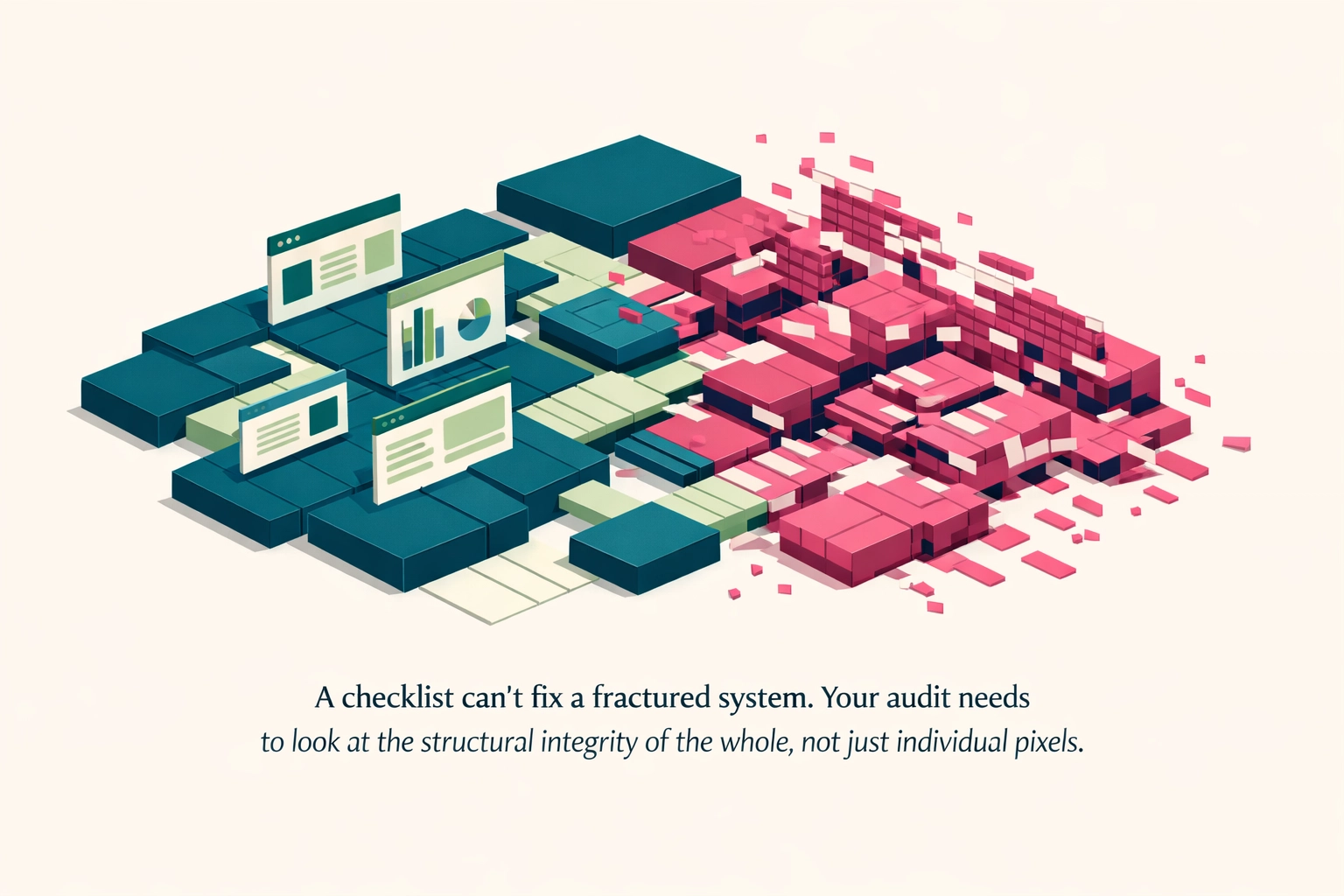
Most accessibility audits are “point-in-time” snapshots. A consultant runs a tool, hands you a 50-page PDF of errors, and tells you to fix them. You hand that list to a developer, they spend three weeks clearing the backlog, and you feel safe.
Two weeks later, your site is out of compliance again.
Why? Because Higher Ed websites are living, breathing, decentralized ecosystems. You have hundreds of content creators: from student workers in the Athletics department to tenured faculty in the Physics department: all uploading PDFs, embedding videos, and creating tables.
A checklist fix is a temporary bandage on a systemic wound.
If your audit doesn’t account for the workflow that created the error, you are just paying to fix the same mistake over and over again. This is exactly what I mean when I say we need to prioritize business goals and systems over tools. Your goal isn’t “zero errors on Tuesday”; your goal is a sustainable, accessible platform that serves all users, all the time.
The Three Pillars of a Systemic Accessibility Audit
To meet the 2026 deadline, we need to move past the “find and fix” mentality. A systemic audit focuses on the infrastructure that governs your content. Here is the framework I use when evaluating complex Higher Ed environments.
1. The Content Ecosystem (Distributed Accountability)
In a university, marketing doesn’t own all the content, but marketing often takes the blame for the failures. A systemic audit evaluates who has “publishing power” and what guardrails are in place.
- Role-Based Training: Does your student worker in Admissions know how to write descriptive link text?
- Asset Management: Where are your PDFs stored? Are they tagged? (Hint: Most aren’t).
- The Faculty Gap: Academic freedom does not include the right to post inaccessible course materials. We need to audit the Learning Management Systems (LMS) and public-facing research portals as rigorously as the homepage.
2. Technical Infrastructure (The Vendor Trap)
Higher Ed sites are often “Frankensites”: a mix of a main CMS (like Drupal or WordPress), third-party tuition calculators, virtual tour software, and athletics subdomains.
You are legally responsible for your vendors’ failures.
A systemic audit includes a deep dive into your third-party integrations. If your “Apply Now” portal isn’t keyboard-navigable, your entire site is a failure in the eyes of the DOJ. We need to audit the procurement process itself. Moving forward, no software should enter your ecosystem without a validated VPAT (Voluntary Product Accessibility Template).
3. The Governance Layer (Policy over Plugins)
Compliance is a management problem, not a coding problem. A systemic audit reviews your internal policies.
- How do you handle grievances?
- Is there a clear “accessibility statement” linked in your footer?
- Who is the designated “Accessibility Architect” responsible for long-term monitoring?
Without governance, you are just wasting budget on recurring fixes that never stick.
The Actual Timeline to April 2026
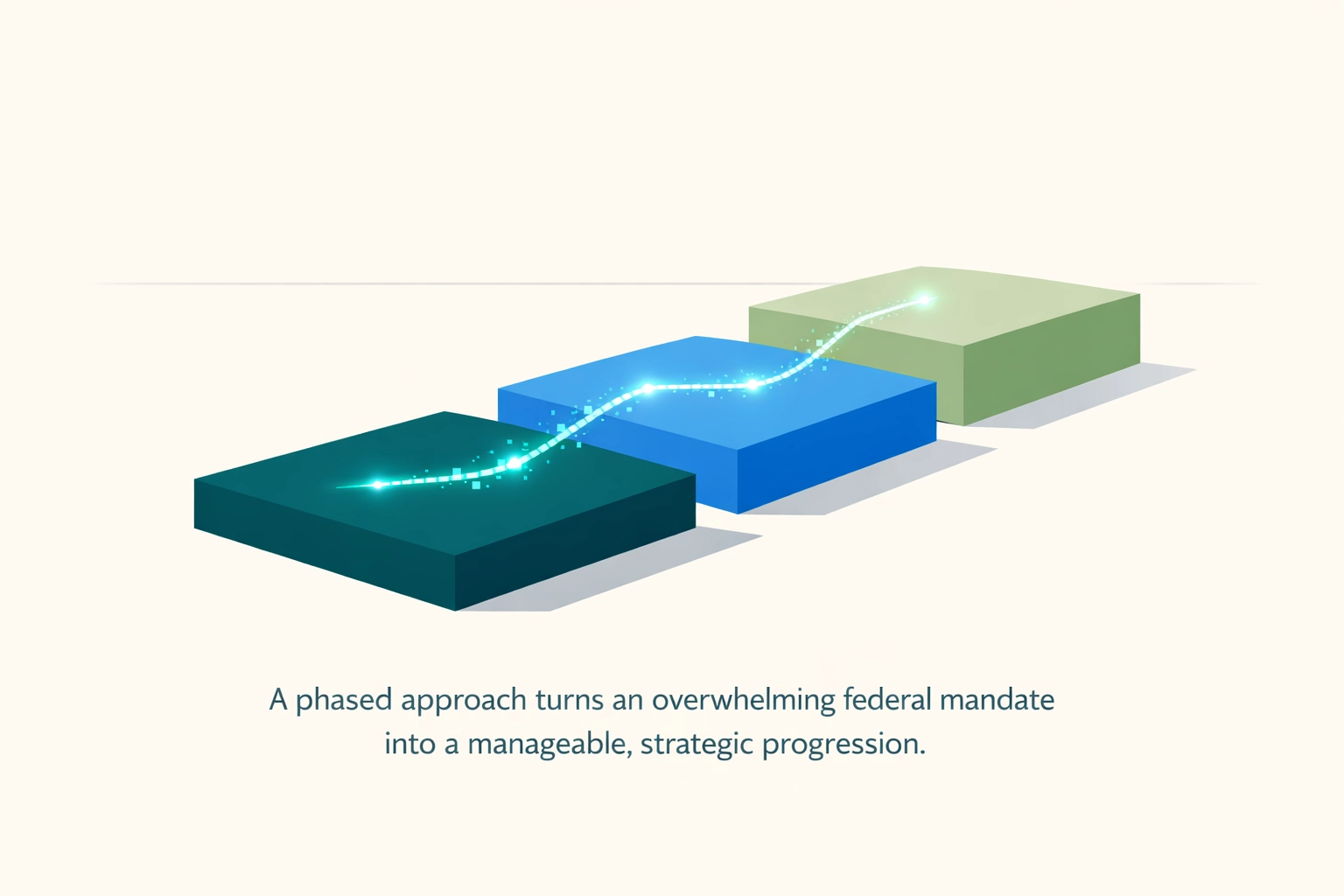
You can’t fix everything overnight, and trying to boil the ocean leaves you with the deadline arriving and nothing to show for it. Here’s how the work should actually break down against the calendar.
Months 1-4: The Critical Path
Focus on the “High-Impact” assets. This includes your homepage, admissions funnel, financial aid pages, and the top 10% of your most-visited content.
- Goal: Ensure that any user can navigate the most critical paths (Inquiry to Enrollment) without barriers.
- Action: Conduct a manual audit of these paths using screen readers and keyboard-only navigation. Automated tools only catch about 30-40% of issues; the “human” element is non-negotiable here.
Months 5-12: The Distributed Content
This is where we tackle the “long tail” of content.
- Goal: Implement automated scanning for all subdomains.
- Action: Launch mandatory training modules for all CMS users. If they don’t pass the training, their publishing rights are revoked. It sounds harsh, but it’s the only way to stop the “data leak” of inaccessible content.
Month 13 Through the Deadline: The Legacy Remediation
The final stretch is for the hard stuff: legacy PDFs, complex data visualizations, and custom-built campus maps.
- Goal: Full institutional compliance and a documented “Continuous Improvement” plan.
- Action: This is the time to negotiate with vendors or replace platforms that refuse to meet WCAG 2.1 standards.
The Strategic Catalyst: It’s Not Just About Compliance
I get it. Accessibility feels like a “cost center.” It feels like something you do to avoid a lawsuit. But let me shift your perspective for a second.
Accessibility is the ultimate Technical SEO play.
Search engines are essentially the world’s most advanced blind users. They crawl text, they value structure, and they reward clarity. When you fix your heading hierarchy for a screen reader, you are helping Google understand your content better. When you optimize your site for keyboard navigation, you are often improving your site speed and Core Web Vitals.
Beyond the technical, there is the Brand & Enrollment factor. The “Gen Alpha” and “Gen Z” cohorts are the most socially conscious generations we’ve ever seen. They notice when a site feels inclusive and intuitive. An accessible site says, “We want you here,” more clearly than any marketing brochure ever could.
Stop Guessing, Start Architecting
The April 2026 deadline is a gift. It’s the leverage you need to finally fix the systemic technical debt that has been slowing down your Higher Ed site for years.
If you’re still relying on a simple checklist or a “scan and fix” service, you are leaving your institution vulnerable. You need a partner who understands that digital accessibility is a subset of a broader, high-performing marketing system.
At MM Sanford, we don’t just find errors; we build the systems that prevent them. We help Higher Ed institutions navigate the “technical talent gap” and organizational inertia to create digital presences that are not only compliant but high-converting and future-proof.
Is your institution ready for 2026, or are you just hoping no one notices?
Let’s move beyond the checklist and build something that actually works for everyone. If you’re ready to stop the “patchwork” approach and start building a systemic strategy, let’s talk.
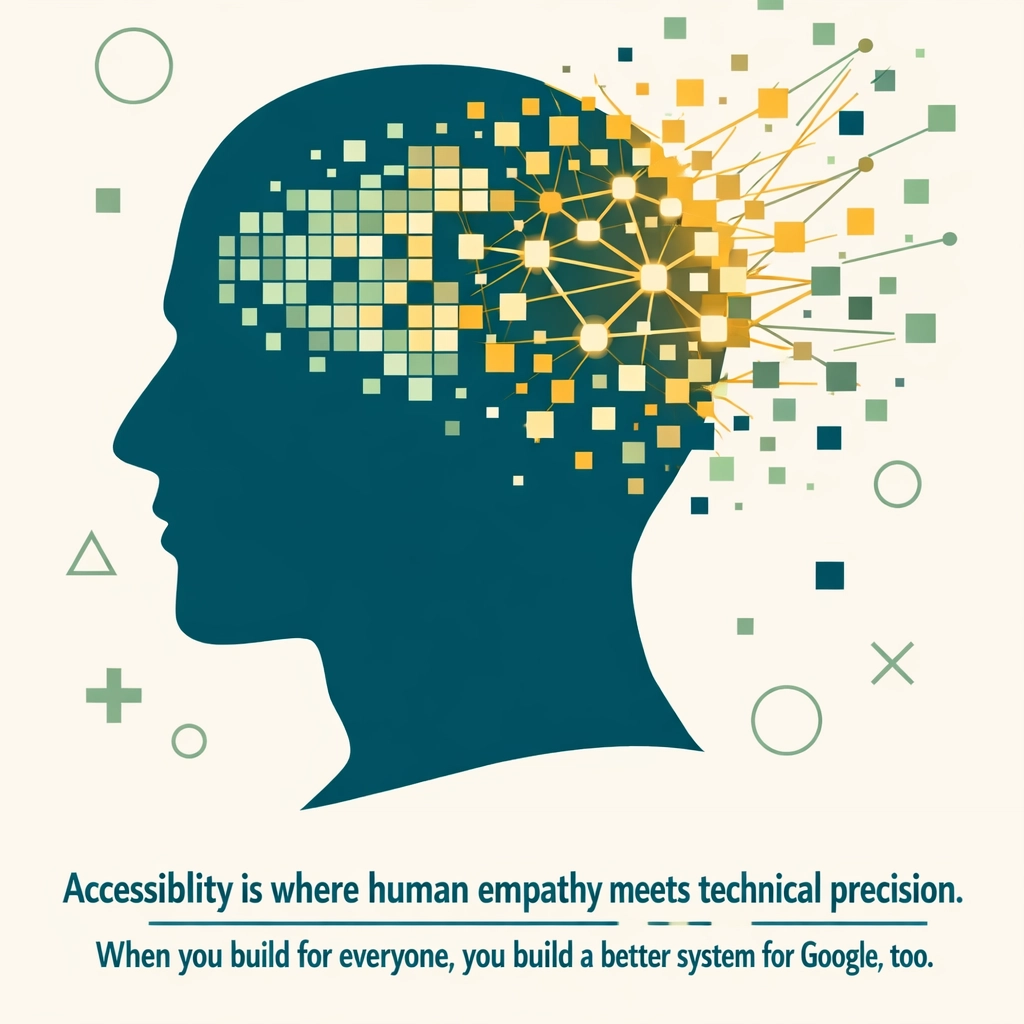
Key Takeaways for Higher Ed Marketing Managers:
- April 2026 is the hard deadline for DOJ Title II compliance.
- Checklists are insufficient for decentralized university environments.
- Systemic audits must include vendor management and distributed content workflows.
- Accessibility is a strategic advantage for both SEO and student UX.
- Work backward from the deadline, tackling critical paths first, followed by institutional training.