If your agency’s monthly report looks like a collection of random charts that require a 45-minute decryption session just to find the “bottom line,” you don’t have a partner. You have a hostage taker.
In the world of high-stakes digital marketing: especially for government agencies, higher ed institutions, and complex B2B organizations: there is a pervasive and toxic trend I call the “Retainer Trap.”
It works like this: An agency sets up a “black box” of technical SEO, GA4 configurations, and proprietary reporting dashboards. They intentionally overcomplicate the “speeds and feeds” of the data so that you, the client, feel like you couldn’t possibly manage without them. They want you to stay hooked on their monthly hours just to keep the lights on.
I’m here to tell you that if your agency isn’t actively trying to make themselves obsolete by empowering your internal team, it’s time to show them the door.
The Philosophy of Permission-Based Consulting
At MM Sanford, I operate on a different frequency: Permission-Based Consulting.
My goal isn’t to be your permanent crutch. My goal is to be the architect who hands you the blueprints, explains how the foundation was poured, and trains your team to maintain the structure. A true partner should be a bridge to your independence, not a wall between you and your own data.
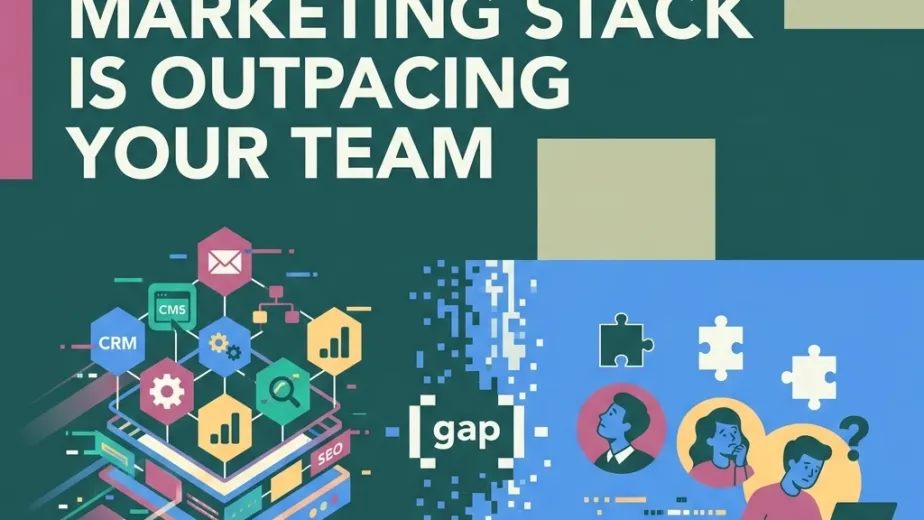
In the public sector and higher education, we see a massive “Tech Talent Gap.” Organizations have the budget for massive software suites: HubSpot, Salesforce, Google Cloud: but they lack the internal muscle to drive them. Agencies often exploit this gap by positioning themselves as the only ones “smart enough” to touch the dials.
Data Sovereignty is the antidote. You should own your data, you should own your accounts, and most importantly, you should own the understanding of how it all works.

Case Study: From Data-Drowning to Data Sovereignty
We recently worked with a large state-level agency that was, quite frankly, drowning. They were spending six figures annually on a “full-service” agency retainer, yet they couldn’t answer basic constituent questions: like which services were most requested by specific zip codes: without calling their vendor and waiting three days for a custom report.
They had the tools, but they didn’t have the “intersection of strategy and technology.” They had a vendor, but they didn’t have a system.
Step 1: The Collaborative Audit
Instead of handing over a 50-page PDF audit and saying “trust us,” we performed a Collaborative Audit. We sat down with their internal IT and marketing leads and looked at the “Ghost Scripts” and technical debt together.
We showed them exactly how their Google Tag Manager governance had spiraled out of control. We didn’t just fix the tags; we taught them why the tags were broken and how to spot “sprawl” before it slows down the site again.
Step 2: Bridging the Talent Gap
We identified that their team didn’t need more software; they needed to understand the system. We moved away from the agency’s proprietary “black box” dashboard and moved their data into a BigQuery warehouse that they owned.
Step 3: Achieving Sovereignty
The “lightbulb moment” happened four months in. During a legislative session, the agency head needed to justify budget allocation for a specific digital service. Instead of calling me, an internal staffer pulled the data directly from their own dashboard, filtered it by the required metrics, and presented it.
That is what success looks like. They stopped asking “What does the agency say?” and started saying “Here is what our data shows.”
3 Questions to Ask Your Current Partner
If you suspect you’re stuck in a Retainer Trap, ask your agency these three questions. Their reactions will tell you everything you need to know.
1. “Can my team access the raw data in BigQuery without your intervention?”
If they stumble over this, or tell you that raw data is “too complex for non-technical users,” they are gatekeeping. In the era of privacy-first analytics, owning your raw data is a requirement, not a luxury.
2. “Will you provide a standard operating procedure (SOP) for our GTM and GA4 setup?”
A “Bridge” agency documents their work so your team can follow it. A “Black Box” agency keeps the process in their heads so you have to keep paying for their “expertise.” If you don’t have a GTM governance framework, you don’t have a plan.
3. “How are you training our team to eventually handle these tasks internally?”
A consultant’s job is to level up the client. If the agency’s plan for the next 12 months is “more of the same,” they aren’t consulting; they’re just billing.
4. “Can you break down exactly what each line item on our invoice actually buys us?”
If your monthly retainer is a single flat number with no itemization, or the itemization is vague enough to mean anything (“strategic oversight,” “ongoing optimization”), you have no way to know whether you’re paying for 40 hours of real work or 4 hours padded to look like 40. A partner who’s actually confident in the value they deliver has no reason to keep that opaque.
What the Advisory Relationship Actually Looks Like Once Your Team Is Trained
The case study above ends at the moment your team can pull its own numbers. Worth describing what comes after that, since “we’ll shift to advisory” is a phrase agencies use vaguely. In practice, it means the relationship changes shape rather than ending: instead of monthly tactical check-ins, we meet quarterly to look at 12-month trends, flag emerging shifts (a platform deprecation, a new privacy regulation) before they become urgent, and review anything genuinely complex your team hits, like a migration or a new subdomain integration, that falls outside their day-to-day scope. The retainer shrinks substantially because the hours shrink substantially. That’s the actual test of whether an agency believes what they said about empowering you: does their invoice go down once your team can do the routine work themselves?

Stop Fearing the Technical Detail
I often hear from marketing directors in higher ed or government who say, “I’m just not a ‘data person.’ That’s why we hired the agency.”
You don’t need to be a data scientist, but you must be a data owner.
When you abdicate all technical understanding to an outside party, you lose the ability to lead. You become a passenger in your own marketing strategy. You don’t need to know how to write SQL, but you do need to know that your GA4 implementation framework is built on solid ground.
The Engagement Question
I want to hear from you: What is one technical task your team should know how to do, but you’re too afraid to ask your agency to explain?
Whether it’s understanding how server-side tagging works or simply knowing how to find your actual conversion rate without a custom report, there are no stupid questions: only agencies that benefit from you not asking them.
If you’re ready to move away from the “Black Box” and toward a partnership that actually empowers your team, let’s talk. We can start with a simple GA4 audit to see exactly where the gaps are.
Your data belongs to you. It’s time you started acting like it.