In the world of government digital services, "findability" is often the difference between a satisfied citizen and a flooded call center.
I’ve spent over two decades looking under the hood of large-scale websites, and government agencies present a unique paradox. On one hand, you have massive domain authority: the kind of "link juice" private corporations would kill for. On the other hand, internal inertia, a persistent tech talent gap, and a maze of legacy systems often leave that authority rotting on the vine.
When a citizen searches for "how to file an extension" on a Department of Taxation website and ends up on a 404 page or a PDF from 2012, that isn't just an SEO failure. It’s a breakdown in public service.
Technical SEO is not about "tricking" Google; it is about ensuring your agency’s infrastructure is capable of serving the public.
In this article, I’m going to break down how to move from digital chaos to compliance using a phased technical SEO audit framework. We aren't going to fix everything at once. We’re going to build a Customer Experience Launchpad: a system that treats search engines as the front door to your agency.
The Strategy: Why a Phased Approach?
Most enterprise-level organizations make the mistake of trying to boil the ocean. They run a massive crawl, get a 400-page PDF of errors, and then… nothing happens. The developers are busy with security patches, and the marketing team doesn't have the technical depth to prioritize the fixes.
A phased rollout prevents organizational paralysis.
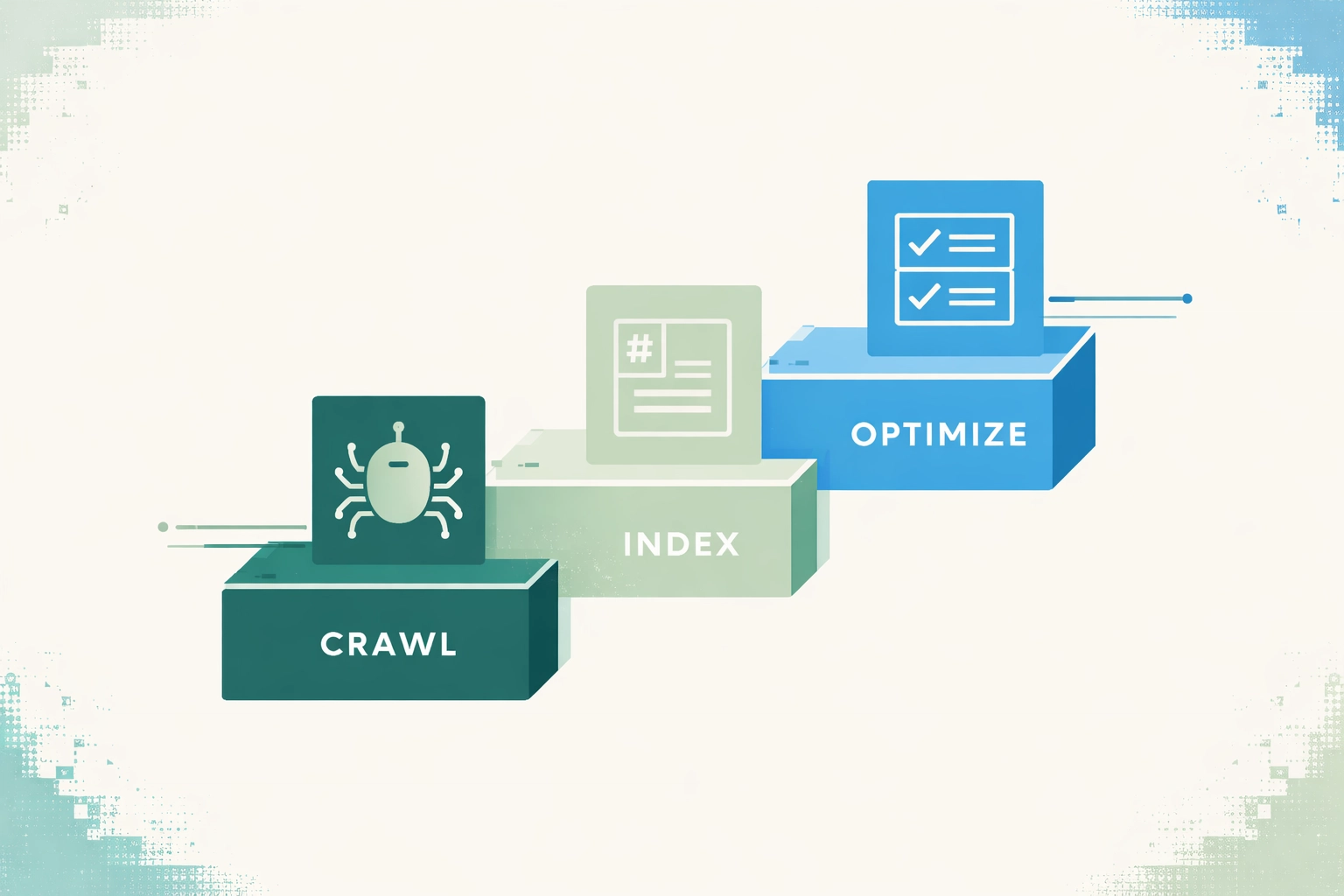
By breaking the SEO technical audit into three distinct stages, we align the work with your agency’s actual capacity to execute. We move from the most visible "Core" pages to the "Complex" applications that usually hide in subdomains.
Phase I: The Core Service Layer (Foundational Health)
The first 30 days of any Enterprise SEO engagement should focus on the pages that handle 80% of your traffic. For a Department of Taxation, this is your homepage, "Where's My Refund" landing pages, and primary tax-type sections (Individual vs. Business).
1. Crawlability and Indexing
If Googlebot can't see it, the citizen won't find it. We look for "index bloat": thousands of low-value pages (like old internal search result URLs) that waste your crawl budget.
- The Fix: Audit your
robots.txtand XML sitemaps. Ensure your core service pages aren't accidentally tagged withnoindex.
2. The HTTPS Mandate and Core Web Vitals
Government sites must be secure, but they also must be fast. Google’s Core Web Vitals are now a weighted ranking factor. If your "Contact Us" page takes six seconds to load on a mobile device, your ranking will suffer.
- The Fix: Use a technical SEO audit to identify unoptimized images or render-blocking JavaScript that is slowing down your core pages.
3. Accessibility as SEO
Accessibility (Section 508 compliance) and SEO are two sides of the same coin. Proper H1-H6 heading structures, alt text for images, and clear link anchors help both screen readers and search crawlers understand your content.
- Bold Takeaway: If your site isn't accessible, it isn't optimized. Period.
Phase II: The Interactive Layer (Engagement and Intent)
Once the foundation is solid, we move to the interactive elements. This is where many government sites break. These are the calculators, dynamic forms, and "Find a Local Office" tools.
1. JavaScript Rendering Issues
Modern web apps often rely on JavaScript to display content. If your agency uses a framework like React or Angular for its "Tax Calculator," there’s a high chance Google is seeing a blank page.
- The Fix: We test how the page renders. If the "meat" of the page only appears after a user interaction, we need to implement server-side rendering or dynamic rendering. You can learn more about server-side tagging and rendering here.
2. Schema Markup for Government Services
Schema markup is a way of "labeling" your data so search engines can display rich snippets. For an agency, this means your office hours, physical addresses, and even "How-To" steps for filing forms can appear directly in the search results.
- The Fix: Implement
GovernmentServiceandOrganizationschema to give search engines a structured map of what you do.
3. Internal Link Governance
Large agencies often suffer from "departmental silos." The "Income Tax" section never links to the "Payments" section, even though the user needs both.
- The Fix: We map the user journey and use internal linking to guide both the user and the crawler to the next logical step. This reduces "bounce rates" and improves the authority of your deep service pages.

Phase III: The Complex Layer (Legacy Apps and Subdomains)
This is the "final boss" of Technical SEO. Most government agencies have "zombie" subdomains: old portals like v1-archive.tax.state.gov: that are still indexed and confusing users.
1. Subdomain Consolidation
Every time you create a new subdomain, you split your domain authority. Unless there is a massive technical requirement, your applications should live in subdirectories (e.g., /portal/) rather than subdomains.
- The Fix: Audit all subdomains. Redirect the ones that are no longer needed and ensure the ones that remain are properly linked to the main site.
2. Handling Authenticated Areas and PII
Privacy is the "elephant in the room" for government SEO. You cannot have search engines crawling pages that contain Personally Identifiable Information (PII).
- The Fix: We ensure that login walls are properly configured so that crawlers stay in the "public" areas while still being able to index the "informational" entry points. This is a critical part of privacy-first analytics and SEO.
3. Legacy PDF Transition
Agencies love PDFs. Search engines? Not so much. While Google can index PDFs, they offer a terrible mobile experience and zero navigation.
- The Fix: Identify high-traffic PDFs and convert them into HTML pages. In past projects, I’ve seen organic traffic for specific forms jump by 40% simply by moving the content from a static PDF to a responsive web page.
Data Visibility: Analytics as a Launchpad
A technical SEO audit is useless if you can't measure the impact. But for government agencies, "measuring" shouldn't just mean counting hits. It should mean tracking successful completions.
In my work with large organizations, I often see GA4 setups that are "out of the box": meaning they track everything and tell you nothing. We need to move toward a model where your data drives your budget decisions.
If you can see that 60% of people who land on your "Business Tax" page leave without clicking a single link, you have a usability problem, not just an SEO problem. By fixing the technical architecture, you aren't just ranking higher; you’re making your agency more efficient.
I’ve seen this method work in the private sector, too. One IT services firm I consulted for had a qualified lead rate of less than 1%. By implementing a phased technical and retargeting strategy, we raised that rate to over 5%. The same logic applies to government: Better data leads to better service delivery.
Stop Wasting Your Digital Budget
The biggest waste of taxpayer money in the digital space isn't expensive software: it's data invisibility.
If you don't know why your site isn't ranking, or why users are abandoning your forms, you are flying blind. A phased SEO technical audit provides the visibility you need to stop guessing and start fixing.
The "Average" Marketer vs. The Innovative Leader
As I’ve said before, mere competence is not enough. There are plenty of people who can run a "standard" audit. But an innovative marketer (or agency director) understands that the system matters more than the tool.
Don't let your agency fall victim to the "Hollywood myth" that a new CMS or a flashy redesign will fix your problems. Fix the plumbing first.
Are You Ready to Audit Your Infrastructure?
Whether you are dealing with a "Department of Taxation" sized mess or a smaller municipal site, the steps are the same:
- Audit the core (Phase I).
- Optimize the interaction (Phase II).
- Govern the complex (Phase III).
If you’re struggling with "tag sprawl" or data that you simply don't trust, you might need a GTM governance framework to accompany your SEO efforts.
Technical SEO is a long game. It requires discipline, a clear roadmap, and the bravery to ignore the naysayers who say "that's just the way we've always done it."
If you have questions about how to apply this phased approach to your specific agency, let's talk. I’m here to help you turn your digital chaos into a compliant, high-performing service engine.