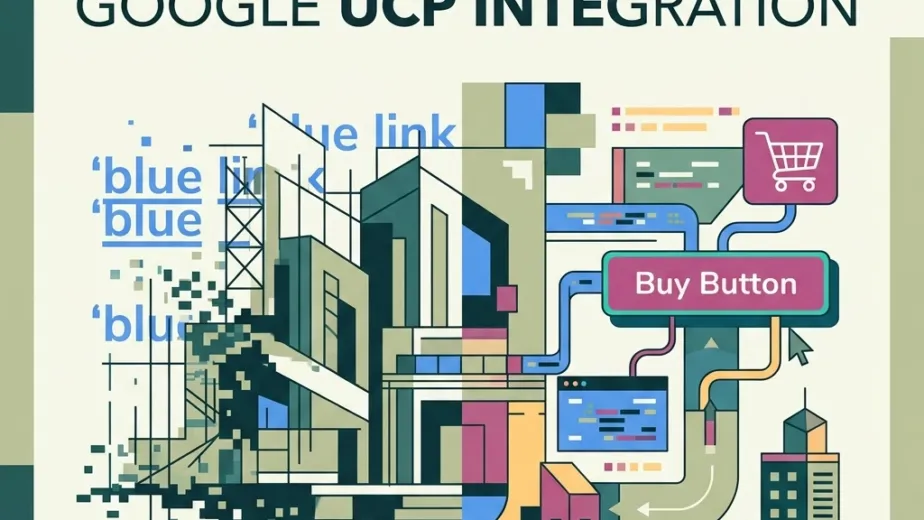

If you’ve been following Google I/O 2026, you know the "blue link" era didn't just end: it was structurally demolished. Between the rollout of Gemini 3.5 Flash and the preview of next-gen models boasting a 2-million token context window, the goalposts for enterprise SEO haven't just moved; they’ve been replaced by an entirely new game called "AI Mode."
For most CMOs at large universities or executive directors in state government, the phrase "context window" sounds like technical trivia. It isn’t. A 2-million token context window is the difference between a search engine reading a summary of your site and a search engine "knowing" every single PDF, program page, and policy document you’ve ever published.
In this new reality, your SEO content strategy is no longer about winning a click. It’s about being the foundational "source of truth" that Google’s Information Agents use to build their answers. If you aren't architecting your site for this level of ingestion, you aren't just losing rank: you're becoming invisible to the agents that now manage the user's journey.
From Search Bar to AI Mode: The Death of the Traditional Query
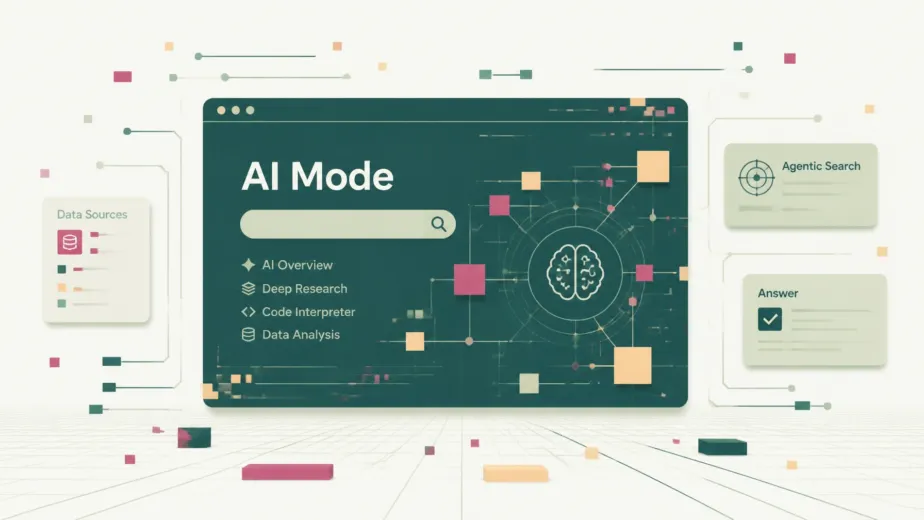
We have officially moved into the era of Agentic Search. At I/O 2026, Google reported that over 1 billion monthly active users are now using "AI Mode": a conversational, multi-step interface that replaces the list of results with a synthesized, interactive dashboard.

In the old world, a prospective student might search for "best MBA programs for working professionals." They’d get ten links, click three, and fill out a form. In AI Mode, the user asks that same question, and Gemini 3.5 doesn’t just show links: it builds a comparison table of your curriculum versus your competitors, checks your accreditation status via your latest PDF reports, and offers to schedule a call with your admissions office.
Key Takeaway: You are no longer optimizing for a human to find a link; you are optimizing for an agent to digest your data and represent your brand accurately in a generative interface.
Phase I: Strategic Content Architecture (Making Your Data Ingestible)
If Google can now "read" 2 million tokens at once, your internal technical structure matters more than ever. If your information architecture is a mess, the AI’s "understanding" of your site will be equally messy.
For my clients in Higher Ed and Government, this is where organizational inertia usually kills performance. You have legacy systems, unoptimized program pages, and thousands of PDFs that haven't been touched since 2018.
1. Canonical Source-of-Truth Optimization
In an agent-driven world, the AI needs to know which page is the definitive version of a fact. If your university lists three different sets of tuition fees across three different subdomains, the AI will hallucinate or, worse, cite your competitor who has their data organized.
- The Fix: Implement a strict technical SEO audit to consolidate duplicate content and use Schema.org to declare the primary "Source of Truth" for every entity.
2. Semantic Information Architecture
Agents don't just "crawl" links; they map concepts. Your site’s navigation needs to be logically grouped by "entities" (Degrees, Services, Departments) rather than internal organizational charts. If a user asks a federal agency about "tax credits for green energy," the agent needs to jump from a news post to a technical regulation to a calculator effortlessly.
Phase II: Multi-Modal SEO and the Stewardship of Trust
One of the most overlooked announcements at I/O 2026 was the deep integration of SynthID and Content Credentials. As AI-generated noise floods the web, Google is using these signals to verify that your content is actually yours.

Enterprise SEO in 2026 is as much about data stewardship as it is about keywords. You need to prove to the model that your data is authoritative and verified.
1. Video and Audio as Searchable Text
Gemini 3.5 Flash is natively multi-modal. This means your faculty lectures, agency town halls, and B2B webinars are now part of the searchable context.
- The Fix: Don’t just embed a YouTube video. Provide structured transcripts, chapter markers, and metadata. If you don’t, the agent has to "guess" what’s in the video. If you provide the data, you control the narrative.
2. High E-E-A-T Signal Reinforcement
Google is looking for "expert-led" content to ground its AI answers. For government agencies, this means ensuring that every policy update is clearly authored by a verified official. For B2B, it means your whitepapers need to be more than just marketing fluff; they need to be high-density data sources that a long-context model can sink its teeth into.
Phase III: The Internal Pivot (Using 2M Tokens to Save Your Budget)
While we talk a lot about how Google uses these models, the real "unfair advantage" for enterprise teams is using Gemini 3.5 internally to fix their own sites.
How many times have you sat through a "content audit" that took six months and $50k, only to result in a spreadsheet no one read? With a 2-million token context window, I can now ingest your entire site’s content library, your GA4 event data, and your search console logs into a single prompt.

The Forensic Digital Audit 2.0
Instead of manual checking, we use these long-context models to:
- Map Intent Gaps: Identify every question users are asking in Search Console that your current content doesn't answer.
- Clean Up Tag Sprawl: Compare your Google Tag Manager setup against your actual site architecture to find "ghost" data that is breaking your attribution.
- Governance at Scale: Automatically flag every page on a 50,000-page government site that violates accessibility or privacy standards.
The Conflict That Actually Breaks This: Three Tuition Pages
Here’s what “canonical source of truth” conflict actually looks like in practice, since it’s easy to nod along with the concept and skip the mess underneath it. A university might have tuition figures published on the Admissions page, the Financial Aid page, and a PDF the Registrar’s office updates independently, all technically “current” but drafted at different points in the budget cycle. An agent doesn’t know which one is authoritative; it picks whichever is most recently crawled, structured, or linked, which is not the same thing as whichever is actually correct. The fix isn’t a content audit alone, it’s assigning one page, marked with explicit schema, as the canonical source, and converting every other instance into a page that pulls from or defers to it rather than restating the number independently.
Why "Letting Go" is the Only Way to Win
I’ve said it before, and I’ll say it again: Marketing software is useless without a strategic goal. Many organizations are currently "data-drowning": they have the tools, but they don't have the architecture.
The 2-million token context window is a gift for the "Control Freak" marketer. It allows you to finally see the "big picture" of your data that was previously too massive to comprehend. But to leverage it, you have to stop thinking about "ranking #1" and start thinking about being the canonical infrastructure for the AI era.

Your AI is only as honest as your data. If your site is built on a foundation of broken links, outdated PDFs, and inconsistent messaging, that is exactly what Gemini will tell the world about you.
Are You Ready for AI Mode?
The shift to Gemini 3.5 and 2M tokens isn't a "wait and see" situation. Google has already flipped the switch for over a billion users. Your prospective students and constituents are already using these agents to bypass your homepage entirely.
If you’re still trying to win with a 2024 SEO strategy, you’re playing checkers while the rest of the web is playing 4D chess.
Does your current site strategy actually matter in 2026? If you aren't sure, it's time for a strategic pivot. Let's stop hiring "vendors" and start building "architects."