I have seen it a thousand times. A major institution: maybe a state tax department or a prestigious university: spends $150,000 on a visual rebrand. They hire a boutique agency to pick the perfect shade of "trustworthy blue," a font that screams "innovation," and a logo that looks great on a tote bag.
Then they launch the site, and under the hood, the technical metadata is still in the dark ages.
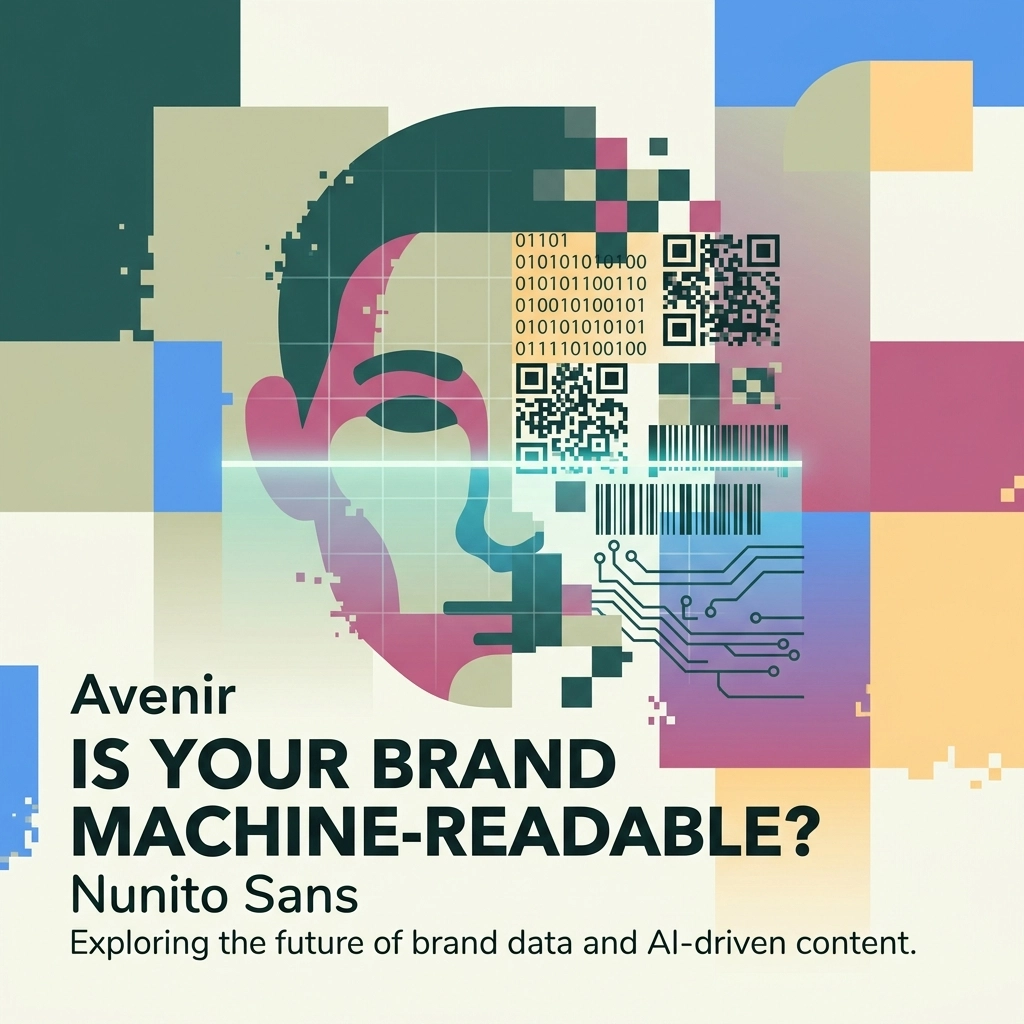
If your website looks like a masterpiece but reads like gibberish to a machine, you are effectively "offline" for 50% of your future users.
In 2026, we have moved past the era where your primary visitor is a human with a mouse. Your primary visitor is now an LLM-powered agent: an "AI agent": that is tasked with summarizing your services, comparing your tuition rates, or verifying your agency’s policy.
If that agent cannot programmatically verify who you are, what you do, and why you are an authority, it will simply make it up. Or worse, it will cite your competitor because their data was easier to digest.
The Irony of the "Visual-First" Strategy
We are living through a massive disconnect. Leadership is obsessed with the "feel" of the brand, yet they ignore the "infrastructure" of the brand.
I call this the Visual Blind Spot.
In my twenty years of consulting, specifically in complex sectors like government and higher education, I’ve noticed that organizational inertia often keeps brands stuck in a "document-based" mindset. You think of your brand guidelines as a PDF. AI agents think of your brand as a set of queryable data points.
When you have broken Schema, missing Entity definitions, or a disconnected technical architecture, you aren’t just failing at SEO. You are failing at basic communication. You wouldn't send a brochure to a client with half the pages missing; why are you sending a website to the AI search layer with half the metadata broken?
This is exactly why enterprise technical SEO fails: it’s treated as a "fix-it" task rather than a systemic requirement for brand survival.

Caption: A conceptual representation of a "Digital Twin" or Knowledge Graph where brand elements are connected by data points rather than just visual lines.
From Strings to Things: The Semantic Shift
For decades, we optimized for "strings": literal sequences of characters. If you wanted to rank for "Federal Tax Credits," you put those words on the page.
In 2026, we optimize for "things." This is Entity-Based SEO.
An "entity" is a uniquely identifiable object or concept. It’s not just the word "MM Sanford." It’s the Organization known as MM Sanford, which has a specific Founder (Marcus Sanford), provides specific Services (Marketing Analytics), and is located in a specific Place.
AI agents rely on a "Knowledge Bridge" to verify your data against established taxonomies.
When an AI agent from OpenAI or Perplexity crawls your site, it isn't "reading" your copy the way a human does. It is looking for a technical fingerprint. It wants to see if your organization has a persistent record that matches what it finds on LinkedIn, Wikidata, or government databases.
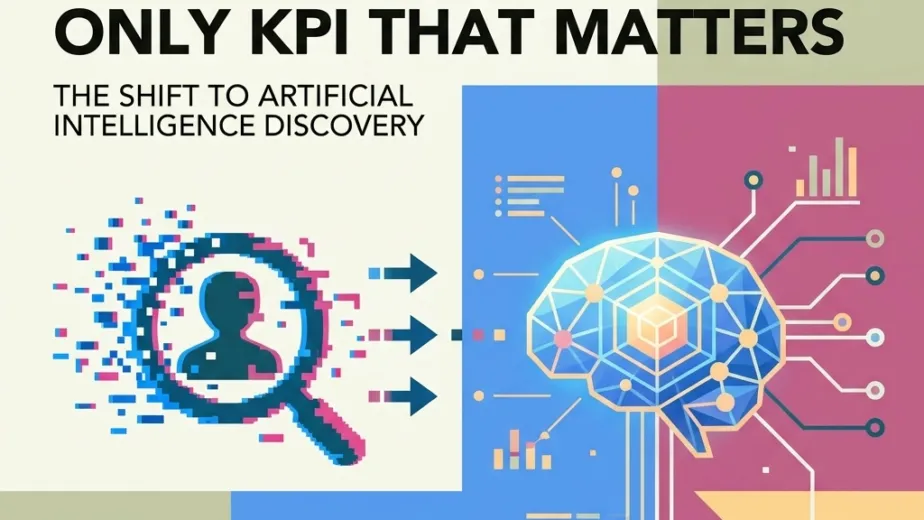
By moving from "Legacy SEO" to Semantic Architecture, you elevate your brand from a technical audit to a "Knowledge Graph Architect." You are building a permanent competitive moat that AI agents can verify and trust. This is the only way to win in a world where AI discovery is the only KPI that matters.
The Strategy: Building Your Semantic Infrastructure
The next era of "Analytical Clarity" isn't about collecting more data; it’s about defining your data better.
Most agencies will tell you to "write better content." I’m telling you to build better infrastructure.
Semantic Infrastructure is the practice of using structured data (Schema.org) to build an internal Knowledge Graph. This isn't just about getting "stars" in a Google search result. It’s about creating a machine-readable map of your brand’s expertise.
In government and higher education, this is critical. Think about a student looking for a specific research grant. If your university's site doesn't explicitly link the Professor (Entity A) to the Department (Entity B) and the Grant (Entity C) through persistent identifiers, the AI agent will struggle to connect the dots.
The result? The student gets a hallucinated answer or a link to a different school that had its technical act together.

Pragmatic Advice: The 3-Point Entity Audit
If you are in a leadership position, you don't need to know how to code JSON-LD, but you do need to ask your team these three questions. This is your baseline for machine-readability.
1. Does your organization have a unique, persistent URI?
In the world of the "Agentic Handshake," names are ambiguous. There are probably ten "St. Jude’s Hospitals" or "Department of Finances."
Your brand needs a persistent @id. This is a unique URL (usually your homepage or a specific Schema node) that acts as your digital social security number. It tells the machine: "Whenever you see this ID, it refers to this specific brand, regardless of where the information is hosted."
2. Are your authors linked to verified "sameAs" profiles?
AI agents value authority. If you publish a white paper on cybersecurity, the machine wants to know who wrote it.
Is the author linked via a sameAs attribute to their LinkedIn profile, their ORCID ID (for academics), or their professional bio? If you aren't connecting your experts to their external footprints, you are wasting your "Expertise, Authoritativeness, and Trustworthiness" (E-A-T).
3. Does your site map reflect the topics you claim to lead?
Look at your category sitemap. Does it actually reflect your topical authority, or is it a mess of "Uncategorized" and "Blog Posts"?
Your technical structure should mirror your business goals. If you claim to be an expert in web analytics, but your technical hierarchy doesn't support that claim with structured topic clusters, the machine won't believe you.

Caption: A high-level audit checklist for executives to verify their brand's machine-readability.
Why This is a "Moat" Against AI Hallucinations
We’ve all seen AI get things wrong. But why does it happen? Hallucinations often occur because there is a "knowledge gap": the AI has a question but can’t find a verified, structured answer, so it predicts the next most likely word.
When you provide machine-readable data, you are providing the "Ground Truth."
By using persistent identifiers and deep Schema integration, you are handing the AI the correct answers on a silver platter. You are making it easier for the agent to be right about you than to be wrong.
This is especially vital as we face the decline of third-party cookies. When you can't rely on tracking the user, you must rely on the user (or their agent) finding your verified data.
The Final Question for Your Next Board Meeting
We spend so much time talking about how humans perceive our brands. We obsess over the color of the buttons and the tone of the "About Us" page.
But here is the reality of 2026: The first interaction most people have with your brand will be filtered through an AI agent.
If an AI agent summarized your company mission today based solely on your site's code, would it get it right, or would it hallucinate your competitor's values?
If you aren't sure, it's time to stop looking at the pixels and start looking at the data.
Is your brand machine-readable? Or are you just a pretty picture in a world that’s stopped looking?
If you're ready to move past the "visual-only" era and build a technical backbone that actually works, let’s talk about your technical SEO strategy. We can bridge the gap between your brand's vision and its digital reality.
Don't leave your brand's reputation to an AI's best guess. Contact us today to start your Entity Audit.