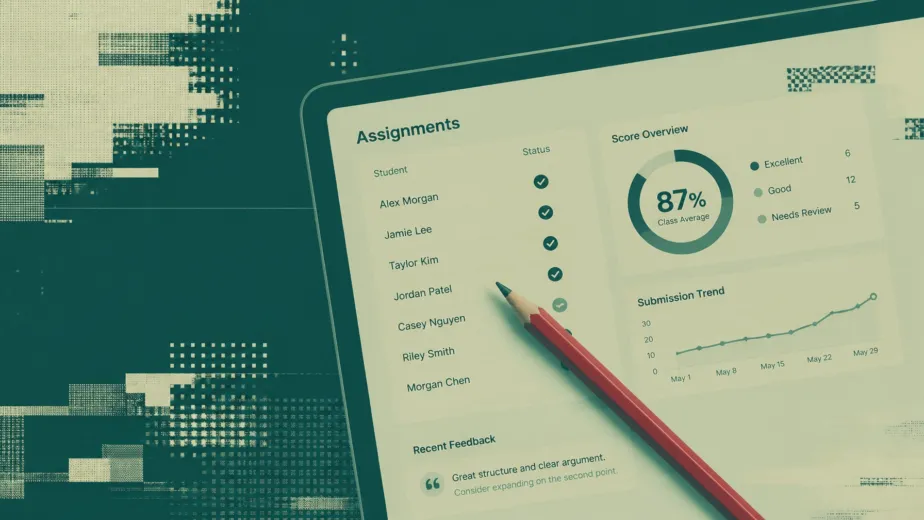
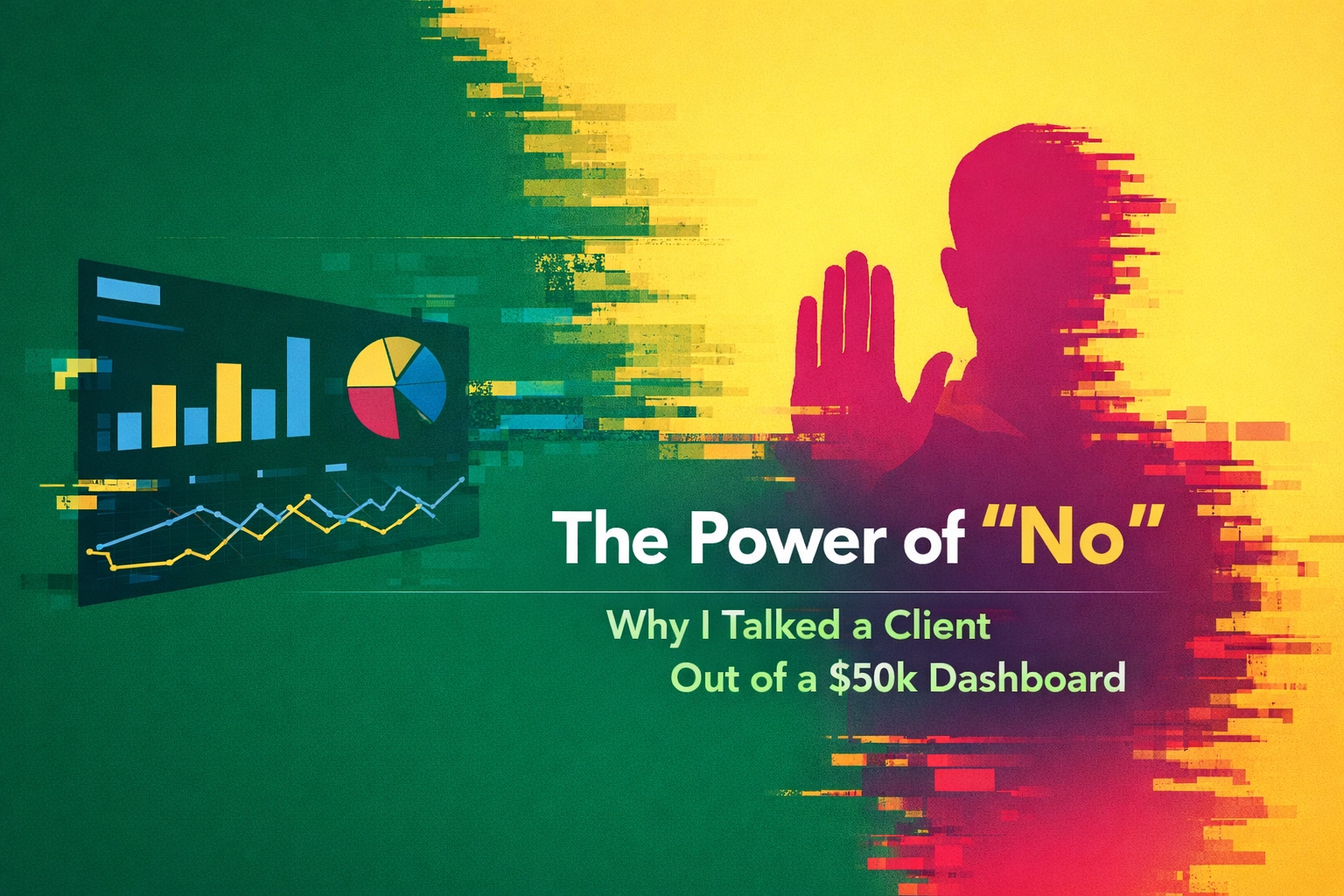
Last month, I sat in a sleek, glass-walled conference room with a C-suite team from a major B2B enterprise. They were ready to write a check. The project? A $50,000 "Executive Command Center" dashboard that would allegedly aggregate every piece of marketing data from their global operations into one "Single Source of Truth."
They had the budget. They had the buy-in. They even had the color palette picked out.
I told them no.
In an industry where most agencies are "Yes Men" designed to harvest as much billable time as possible, walking away from a fifty-thousand-dollar project might seem like professional malpractice. But at MM Sanford, my job isn't to sell you more software or prettier pixels. My job is to ensure your business goals aren't being held hostage by bad data.
The truth is, their "plumbing" was so broken that any dashboard I built would have been a work of expensive fiction. They were about to spend $50k to look at a lie in high definition.
The "Tool Trap" and the Illusion of Progress
We live in a "speeds and feeds" era of marketing. We are told that if we just buy the right stack, GA360, Salesforce, Marketo, a sprinkle of AI-driven attribution, our problems will evaporate. This is the Tool Trap.
Organizations, especially in complex sectors like Higher Ed and Government, often fall victim to the belief that software is a substitute for strategy. It’s a classic case of the Paradox of Choice: the more tools we have, the less we actually understand what’s happening.
I’ve seen it dozens of times. A University spends six figures on a CRM migration, but they still can't tell you which campaign actually drove an enrollment. Or a Government agency buys a high-end visualization tool, yet their internal teams are still manually exporting CSVs and "massaging" the numbers in Excel just to make the weekly report look green.
If your underlying data collection is flawed, a $50k dashboard is just a glorified coat of paint on a crumbling foundation.

Why Dashboards Lie: The Infrastructure Crisis
Before you can visualize data, you have to verify it. In the 2026 landscape, where privacy-first data sovereignty and the death of third-party cookies have fundamentally changed the game, most organizations are flying blind without realizing it.
When I audited this specific client’s setup, I found:
- Broken Cross-Domain Tracking: Visitors were "resetting" as new users every time they moved from the main site to the lead-gen portal.
- Unassigned Traffic Chaos: 40% of their traffic was sitting in the "Unassigned" bucket in GA4 because of botched UTM parameters.
- Privacy Leaks: They were inadvertently sending PII (Personally Identifiable Information) to third-party ad platforms, a massive liability for a company in a regulated industry.
Building a dashboard on top of that mess would be like building a skyscraper on a swamp. You can spend all the money you want on the gold-plated elevators, but the building is still going to sink.
Surgical Data Collection Over "Flashy" Visuals
My consultative philosophy is built on Surgical Data Collection. We don't track everything; we track the right things.
Most agencies want to show you "the moon and the stars", total page views, bounce rates, session duration, metrics that make people feel busy but don't actually drive the P&L. I prefer to strip away the noise.
In a Government context, for example, we don't just look at how many people visited a tax department's landing page. We look at the Success Path: Did they find the form? Did they finish the form? Where did they experience friction?
We prioritize truth over beauty. A simple, accurate table in a Google Sheet is infinitely more valuable to a CEO than a 3D-rendered, interactive map that is based on 30% accurate data.

What I Actually Said in That Room
The exact moment worth recounting: the CMO asked, point blank, “So you’re saying we can’t have the dashboard?” My answer was closer to the opposite: “You can have it in six months, and it’ll actually be true. Right now I’d be handing you a beautiful lie.” The room went quiet, not because it was an unwelcome answer, but because nobody in eighteen months of vendor meetings had told them the thing they were about to buy wouldn’t work. That’s usually the moment that actually changes a client relationship, not the dashboard itself, the willingness to say the uncomfortable true thing before the invoice gets sent.
Empowering the Internal Team (The H2H Value)
The “Agency Factory” model relies on making the client dependent. They want you to call them every time you need a report refreshed.
I hate that model.
My goal at MM Sanford is to work myself out of a job. I want to train your internal team, your "Data Plumbers", to understand the systems we’ve built. True Human-to-Human (H2H) value isn't found in a recurring software subscription; it's found in the transfer of knowledge.
When I told that client "no," I wasn't just saving them $50,000. I was saving them from eighteen months of making bad business decisions based on faulty reports. We redirected a fraction of that budget into fixing their tracking infrastructure and training their marketing directors on how to actually read a GA4 path exploration.

Does Your Agency Have the Integrity to Say "No"?
Ask yourself: When was the last time your marketing partner told you not to spend money?
If they are always saying "yes", yes to the new platform, yes to the shiny dashboard, yes to the experimental ad spend: then they aren't a consultant. They are a vendor.
In the high-stakes worlds of Government, Higher Ed, and B2B, you don't need a vendor to help you spend your budget. You need a partner to help you protect it.
The most expensive dashboard is the one that tells you the wrong thing.
If you’re tired of the "green charts" and you're ready to actually look under the hood of your marketing infrastructure, let's have a conversation. I might tell you everything looks great. I might tell you we have work to do. But I promise I’ll tell you the truth.
Ready to stop the Tool Trap?
Reach out for a Surgical Audit today.
Key Takeaways for the C-Suite:
- Strategy First: Never buy software to solve a process problem.
- Audit Your Plumbing: If your "Unassigned" traffic is high, your reporting is broken.
- Fix Plumbing First: Data accuracy comes before visualization, not after.
- Demand Transparency: If your agency won't show you the raw data sources, they are hiding something.