
In Part 1 of this series, we looked at the high-level shift toward agentic commerce: a world where AI agents aren’t just searching for products, they are buying them.
If you’re an enterprise leader or a marketing director at a large B2B firm, that shift should make you a little nervous. Why? Because the moment an AI agent steps between your brand and your customer, you risk losing the one thing that keeps your business alive: the relationship.
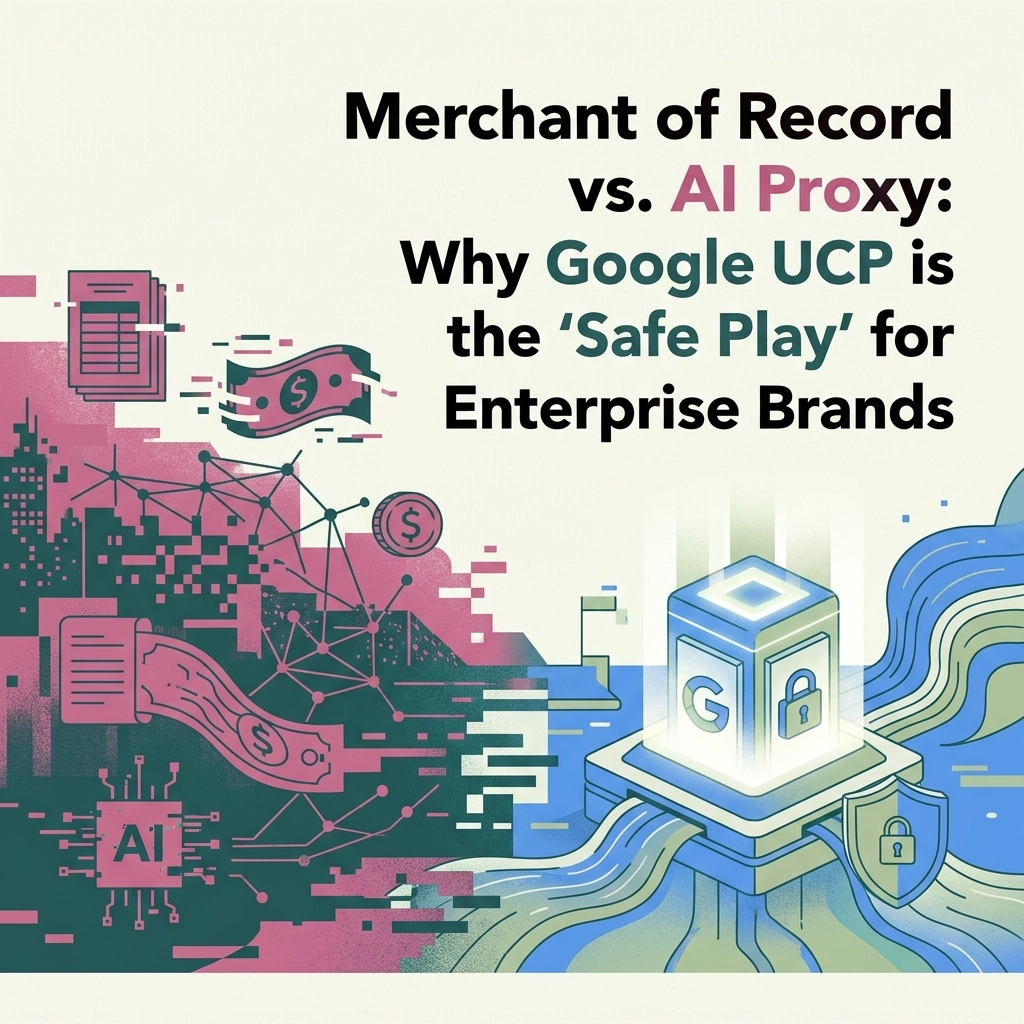
Today, we’re diving into the “Proxy Trap” and why the Google Universal Commerce Protocol (UCP) is being positioned as the “safe play” for brands that value data sovereignty and brand integrity.
We’re going to talk about the Merchant of Record (MoR), the “trust trail,” and why you can’t afford to let a third-party AI proxy own your customer data.
The Rise of the “Shadow Agent”
For twenty years, we’ve fought for “direct-to-consumer” or direct-to-business relationships. We’ve invested millions in CRM systems, first-party data strategies, and personalized experiences.
But as AI agents like Gemini, Claude, and specialized buying bots take over the “shopping” task, a new threat emerges: The AI Proxy.
An AI Proxy is a third-party service that acts as a middleman. The user tells the proxy, “Buy me the best industrial-grade HVAC filter for our warehouse,” and the proxy goes out, finds the product, and completes the transaction using its credentials, its payment methods, and its interface.
The result? The brand becomes a mere fulfillment center. You get the sale, but you don’t get the customer. You don’t get the email address, you don’t get the retargeting data, and you certainly don’t get the brand loyalty.
This is where Google UCP changes the game.
What is a Merchant of Record (and Why Should You Care?)
Before we get into the tech, let’s define the stakes. The Merchant of Record (MoR) is the legal entity authorized to sell goods or services to a customer. They are responsible for:
- Processing the payment.
- Handling sales tax and VAT compliance.
- Managing chargebacks and refunds.
- Maintaining the legal “contract of sale” with the buyer.
In a traditional e-commerce transaction, you are the Merchant of Record. In an AI Proxy model, the proxy service often attempts to become the MoR or creates a convoluted layer where the legal lines are blurred.
For enterprise brands: especially those in highly regulated sectors like government or higher education: losing MoR status is a non-starter. You need to know exactly who is buying your services to maintain compliance with data privacy laws and internal audits.

Why Google UCP is the “Safe Play”
Google UCP isn’t an “agent” in itself; it is a protocol. Think of it as the plumbing that allows different AI agents to talk to your e-commerce engine without stripping away your control.
Google UCP allows the brand to remain the Merchant of Record.
When an agent uses UCP to facilitate a purchase, the protocol ensures that the transaction is passed through to your checkout logic. Whether it’s a “Native Checkout” within an interface or an “Embedded” experience, the brand maintains the “trust trail” with the payment service provider (PSP).
1. Data Sovereignty and Privacy
In the enterprise world, data privacy is the mountain you either climb or die on. If a third-party proxy handles the transaction, they are the ones collecting the PII (Personally Identifiable Information).
With Google UCP, the merchant retains the direct relationship. You get the data. You own the customer record. This is vital for maintaining compliance with GDPR, CCPA, and the strict privacy requirements often found in government contracts.
2. The “Trust Trail”
Security in agentic commerce relies on a verified chain of custody. Google UCP creates a secure handshake between:
- The User (The Principal)
- The AI Agent (The Proxy)
- The Merchant (The Provider)
- The Payment Service (The Facilitator)
By standardizing this handshake, UCP ensures that the brand can verify the identity of the buyer and the authorization of the agent. You aren’t just taking a blind payment from a bot; you are executing a verified transaction.
3. Brand Integrity
When you own the transaction, you own the post-purchase experience. If a “Shadow Agent” buys your product, the customer’s confirmation email comes from the agent, not you. If there’s a shipping delay, they talk to the agent’s support bot, not your team.
UCP keeps your brand at the center of the lifecycle. This is how you prevent your high-value B2B services from being “commoditized” into a line item on an AI’s spreadsheet.

Addressing the “Tech Talent Gap”
I see this all the time in the public sector and higher ed: the leadership knows the “Agentic Future” is coming, but they don’t have the internal team to build the bridge.
The danger is that while you’re waiting to hire a “Head of AI Commerce,” third-party proxies are already starting to scrape your site and insert themselves between you and your constituents.
Don’t wait for the talent gap to close. You need to build the systems now that make your data “agent-ready” while keeping the legal and financial control in your hands. This isn’t just about “selling more stuff”: it’s about protecting your agency’s or company’s digital sovereignty.

Avoiding the “Race to the Bottom”
The “AI Proxy” model is a race to the bottom for brands. It turns every purchase into a price-comparison game where the lowest bidder wins and the brand relationship is discarded.
By adopting Google UCP, you are making a strategic bet on interoperability. You are saying, “I want my products to be findable and buyable by any agent, but only on my terms, with my security standards, and as the Merchant of Record.”
In our next post, we’re going to get under the hood. We’ll look at the actual integration paths: Native vs. Embedded: and how your technical team can start building the infrastructure for UCP.
Key Takeaways for the C-Suite
- Own the Transaction: Being the Merchant of Record (MoR) is non-negotiable for enterprise compliance and long-term brand value.
- Avoid Proxies: Third-party AI proxies strip away your first-party data and commoditize your offerings.
- UCP is the Standard: Google UCP provides the “trust trail” needed to allow AI agents to buy from you without losing your customer relationship.
- Data Sovereignty: Use protocols, not proxies, to maintain data privacy and regulatory compliance.
Are you ready for the shift to agentic commerce?
Most organizations aren’t. They are still worried about basic SEO while the world is moving toward machine-to-machine transactions. If you want to ensure your brand isn’t left behind: or worse, turned into a silent fulfillment partner for an AI bot: we should talk.
Explore our solutions or reach out directly to discuss how we can audit your technical readiness for the UCP era.
Coming up next in Part 3: From “Blue Link” to “Buy Button”: The Architect’s Guide to Google UCP Integration. We’re going deep into the code.