Most agencies want to be a "black box."
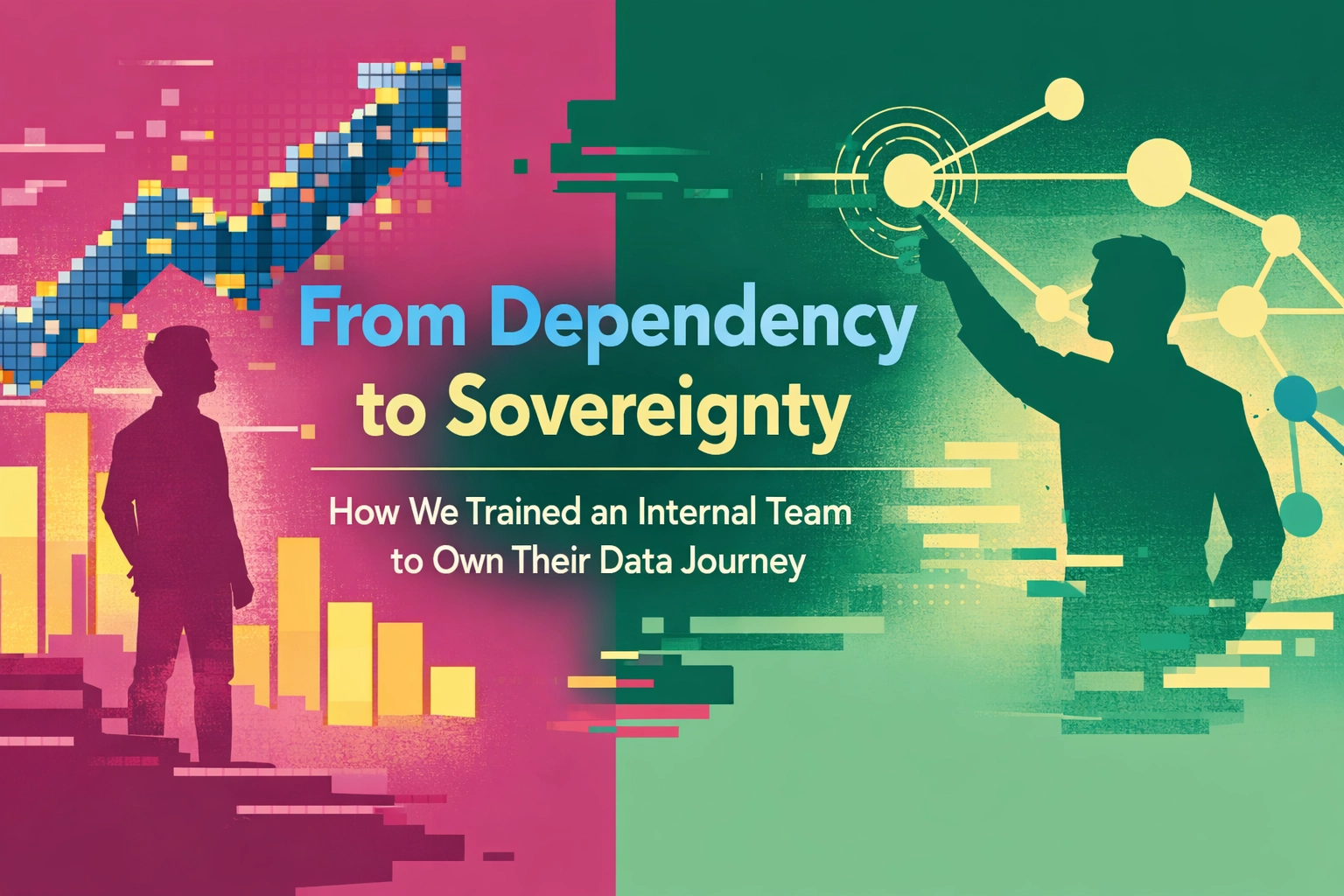
You know the model: you send them a monthly retainer check, they send you a PDF report filled with vanity metrics you didn't ask for, and if you have a follow-up question, you have to "put a ticket in" or wait for the next monthly sync. It is a relationship built on dependency, not empowerment.
I recently worked with a state-level agency that was the poster child for this problem. They were "data-drowning." They had millions of rows of information flowing through their systems, yet they couldn't answer basic constituent questions: like which service programs were actually being utilized by specific zip codes: without calling their outside vendor.
They didn't own their insights; they were essentially renting them.
My goal as a consultant isn't to become a permanent line item on your balance sheet. My goal is to build your internal muscles so you eventually don't need me for the day-to-day. Here is how we took that agency from vendor-dependency to true data sovereignty.
The Illusion of the Software Solution
The first thing I told the leadership team was a hard truth they didn't want to hear: Hiring more software is not a substitute for upskilling your team.
We see this in government and higher ed all the time. There is a massive Tech Talent Gap. Organizations try to bridge that gap by buying the "Enterprise" version of a tool: whether it’s Salesforce, Adobe, or a specialized GA4 implementation framework: assuming the software will do the thinking for them.
Software is just a tool. If your team doesn't understand the intersection of strategy and technology, you just have an expensive calculator that nobody knows how to use.
The agency I was helping had plenty of tools. What they lacked was the internal literacy to understand why their GA4 data was broken. They were making budget decisions based on "ghost data" because their previous vendor had set up the tracking in a way that prioritized the vendor's billing hours over the client's clarity.

First, We Found the Ghost Scripts
Usually, when a consultant does an audit, they go into a dark room, look at your code, and come back with a 50-page document that your IT team will promptly ignore.
We did it differently. We performed a Collaborative Audit.
I sat down with their internal marketing and IT leads and we went through their Google Tag Manager (GTM) container together. We didn't just look for bugs; I taught them how to spot "Ghost Scripts": old tracking codes from campaigns that ended three years ago but were still firing and slowing down the site.
We looked at their technical debt. I showed them how "tag sprawl" was creating security risks and making their data inconsistent. By the end of the week, they weren't just looking at a list of fixes; they were learning the GTM Governance required to keep the house clean after I left.
If you want to stop the bleeding, you have to know where the cuts are. Most organizations have no idea how much tag sprawl is killing their data.
Then We Broke the Retainer Trap
One of the biggest hurdles in government and higher ed is the "Retainer Trap." Large agencies intentionally overcomplicate technical SEO and GA4 setups. They do this because if the system is simple, you don't need them to manage it.
I call this the "Black Box" approach, and I despise it.
During our engagement, we pivoted the strategy toward Permission-Based Consulting. We stripped away the jargon and focused on the business goals. I told the client: "If your team can't access the raw data in BigQuery without calling me, I have failed you."
We shifted their mindset from "What does the agency say?" to "What does our data say?"
This required a cultural shift. We moved away from the "speed and feeds" of technical SEO consulting and started talking about how site architecture affects constituent trust and legislative funding.

Finally, They Owned Their Own Warehouse
The "Aha!" moment happened when we moved their data into their own BigQuery warehouse.
For years, their data sat in the GA4 interface, limited by the standard reporting UI. If they wanted a complex cross-channel report, they had to ask their vendor to build it in Looker Studio.
By setting up a direct BigQuery export, we gave them Data Sovereignty.
- Ownership: They owned the raw records. No vendor could "lock" them out of their own history.
- Privacy: We implemented privacy-first analytics that complied with state regulations while still giving them the granularity they needed.
- Actionability: They started using this data to drive legislative decisions. When a state representative asked, "How many people in my district are actually using the new online portal?" the internal team answered it in ten minutes.
They didn't call me. They didn't "put a ticket in." They just did it. That is what sovereignty looks like.
The Systems Architect Approach
I don't believe in "SEO strategies" that exist in a vacuum. I believe in systems.
Most businesses think their problem is a lack of traffic. In reality, their problem is usually a SEO strategy myth: they are chasing keywords instead of building an ecosystem that supports the user journey.
For this agency, the "system" involved:
- GTM Governance: Implementing a proven framework for managing tags across multiple departments.
- Server-Side Tagging: Moving tracking away from the browser to improve site speed and data accuracy. We discussed whether they really needed server-side tagging and decided it was the "ROI shield" they needed for the future.
- Reporting that Matters: Stopping the vanity metrics and focusing on reporting that drives budget decisions.

Why I Want to be Obsolete
If you hire a consultant who tries to make themselves indispensable, you haven't hired a partner: you've hired a dependency.
A true partner should be working to make themselves obsolete.
By the end of my time with this state agency, the internal team was handling their own GA4 audits. They understood how to spot errors, how to deploy new tags safely, and how to interpret their own data.
They went from being "data-blind" to being the most informed department in the building.
The result? Their internal team's confidence skyrocketed. They stopped wasting budget on "maybe" and started investing in "definitely." They moved from a state of chaos to a state of compliance and high-performance.
Are You Still in the Black Box?
If you are a leader in public service or higher ed, ask yourself three questions about your current marketing or analytics partner:
- Can my team access our raw data without the vendor's help?
- Does the vendor explain how the system works, or do they just tell us it’s "too technical" for us?
- If we fired our agency tomorrow, would our data infrastructure collapse?
If you don't like the answers, it's time to stop renting your insights and start owning them.
The path from dependency to sovereignty isn't always easy: it requires a willingness to unlearn bad habits and invest in your people. But it is the only way to ensure your organization is ready for the technical challenges of 2026 and beyond.
Whether you need a phased technical SEO audit or a complete overhaul of your analytics governance, the goal should always be the same: Internal Empowerment.
Stop being a client of the "black box." Start being the architect of your own data journey.