

A Marketing Manager’s Guide to Entity-Based SEO
How to organize a large site around entities: map your core entities, add nested JSON-LD, and give each one a single canonical page.
Insights
26 posts on Technical SEO.
How to organize a large site around entities: map your core entities, add nested JSON-LD, and give each one a single canonical page.

Ten site migration failures that hurt organic traffic, from homepage catch-all redirects to missing GA4 tracking, with the fix for each one.

How to structure university program pages for AI discovery: authority pillars, program schema, at-a-glance facts and accessible content.

Googlebot reads only the first 2MB of HTML per URL. How truncation hides schema and links, plus the INP, LCP and CLS targets large sites need to meet.

How to turn technical SEO work into a budget case: frame it as risk mitigation, run a what-if scenario and present SEO as a compounding asset.
How entity-based technical SEO works: use schema for disambiguation, link entities to Wikidata, and build topical authority across search.

What WebMCP is, how it lets browser agents complete tasks on your site, and why agencies should map services to machine-executable tools.
Ten points for large organizations on treating SEO as infrastructure, entity-based search, AI citation, crawl efficiency and technical debt.
How to translate crawl budget, Core Web Vitals and indexing gains into business terms executives act on, and report revenue instead of rankings.
How to protect rankings in a large site migration: map entities, not just URLs, consolidate subdomains into subfolders and manage internal stakeholders.

How program page schema describes degree, cost and start dates to search engines, and why colleges need it to be found and chosen.
Ten infrastructure causes of unindexed pages on large government and B2B sites, from crawl budget waste to noindex leaks, with a fix for each.

Traditional search still handles far more queries than AI chat. Why topical authority replaces keyword density, and why interactive tools outlast articles.
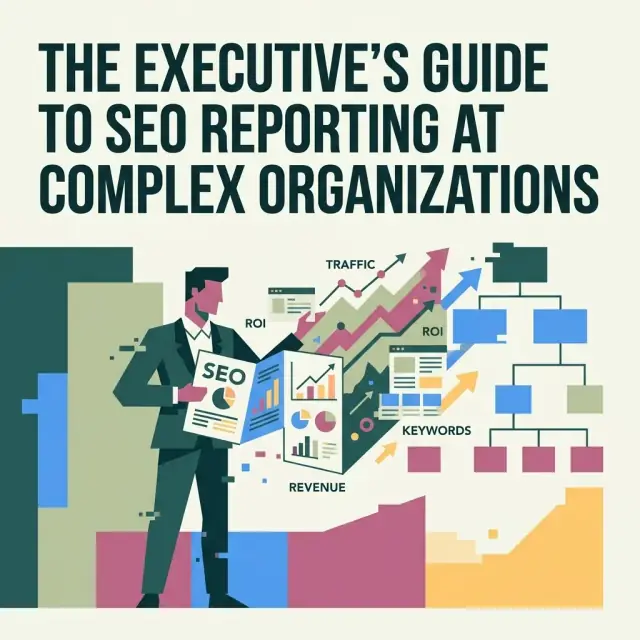
What an SEO report should show executives: mission queries, a short summary that supports a budget decision, and how to handle privacy in reporting.
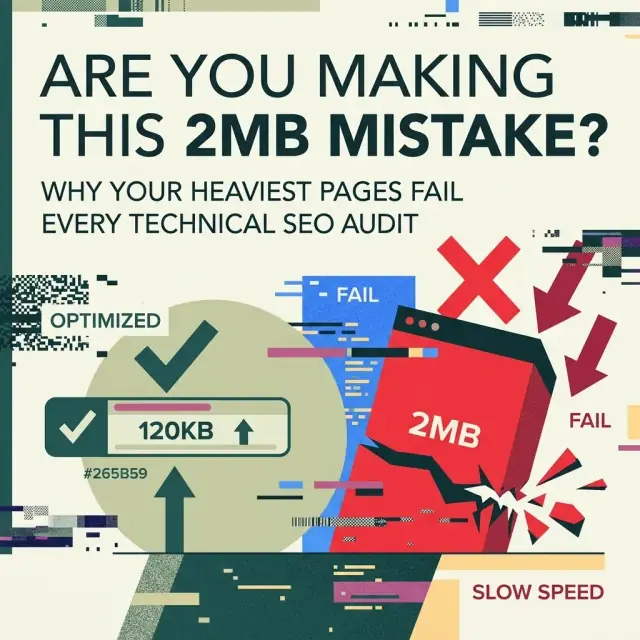
Why Google can stop reading HTML past roughly 2MB, how page bloat hurts AI crawling, and a three-part plan to trim heavy pages safely.

Start an enterprise technical SEO audit with server logs and Search Console data instead of tools: crawl traps, indexing status and click depth.
Two technical SEO audit gaps that hide your site from AI crawlers: robots.txt blocking CSS and JavaScript, and schema that is invalid or contradictory.
How to merge several legacy sites without losing rankings: map intent, pick the strongest page, 301 the rest, and keep tracking intact.
Seven technical SEO issues that keep AI crawlers from reading enterprise sites, including robots.txt blocks, JavaScript rendering and weak schema.
A technical checklist for getting cited by LLMs: allow AI crawlers, keep pages fast, use JSON-LD schema, and structure headings as logic.
Treat an enterprise site migration as a chance to fix thin content, URL structure and speed, and why accessibility deadlines make now the time.
Why large-site SEO audits stall, and how governance, prioritization and business-readable findings get fixes through development backlogs.
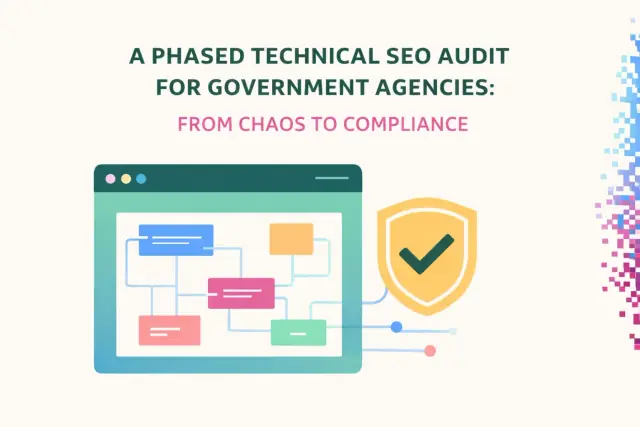
A three-phase technical SEO audit for government agencies: core service pages first, then interactive tools, then legacy subdomains and PDFs.
Why buying more SEO tools does not produce a strategy, and how to build a repeatable system tied to real business goals instead.
Why large sites underperform and what to check: server log analysis of real Googlebot activity, JavaScript rendering problems and hreflang errors.
A ten-point technical SEO audit for large sites: crawlability, HTTPS, Core Web Vitals, canonicals, redirects, schema, sitemaps and internal links.
Tell us what you’re seeing. We’ll tell you plainly whether it’s something we can fix.